

MULTI-LAYER FILM TECHNOLOGY
BENEFITS OF CO-EX FILMS
PembaFlex manufactures multi-layer polyethylene films using 3-layer co-extrusion technology, combining different materials in a single film to deliver performance a single-layer film cannot.
WHAT IS CO-EXTRUSION?
ONE FILM. THREE LAYERS. COMBINED PERFORMANCE.
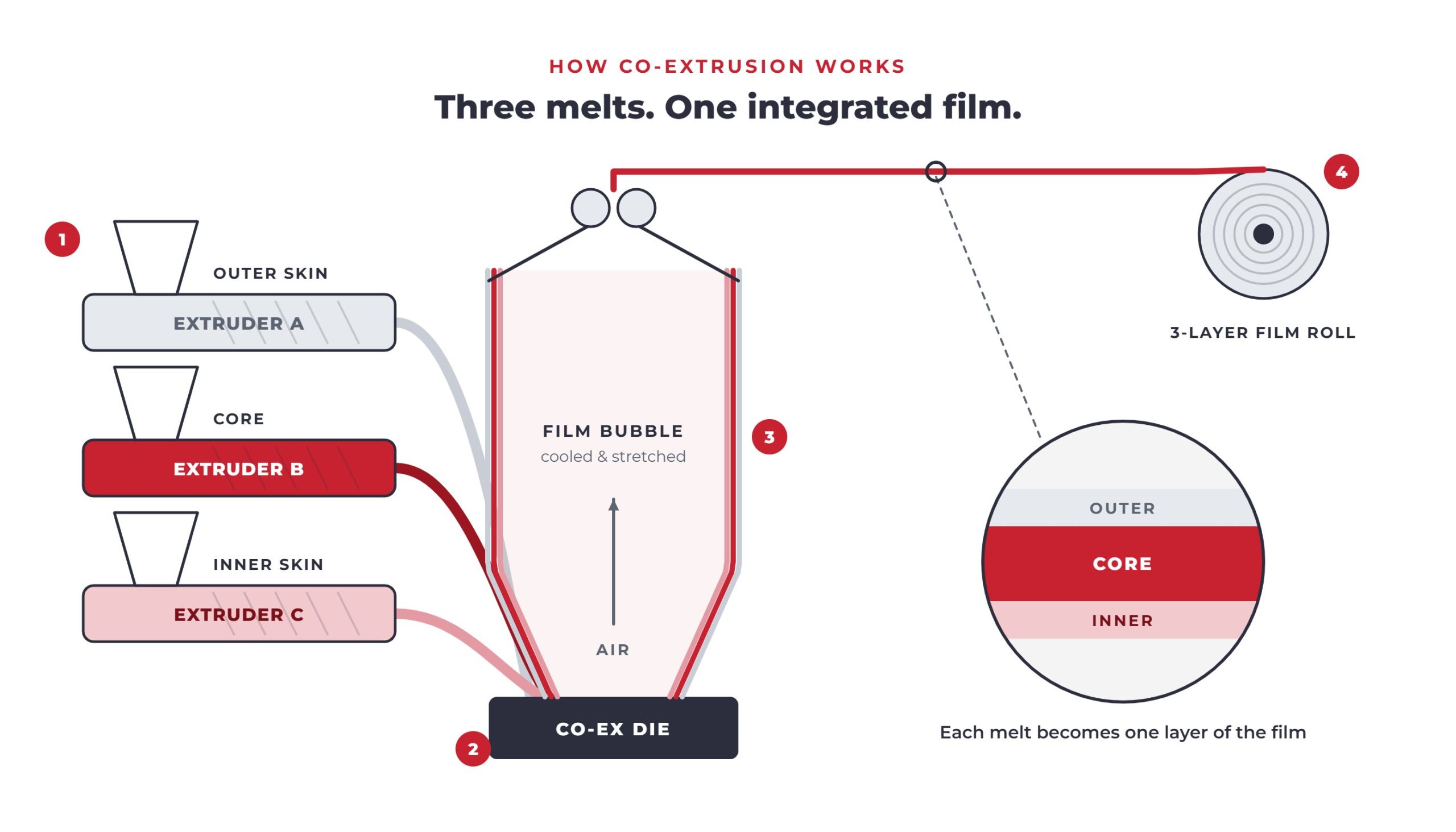
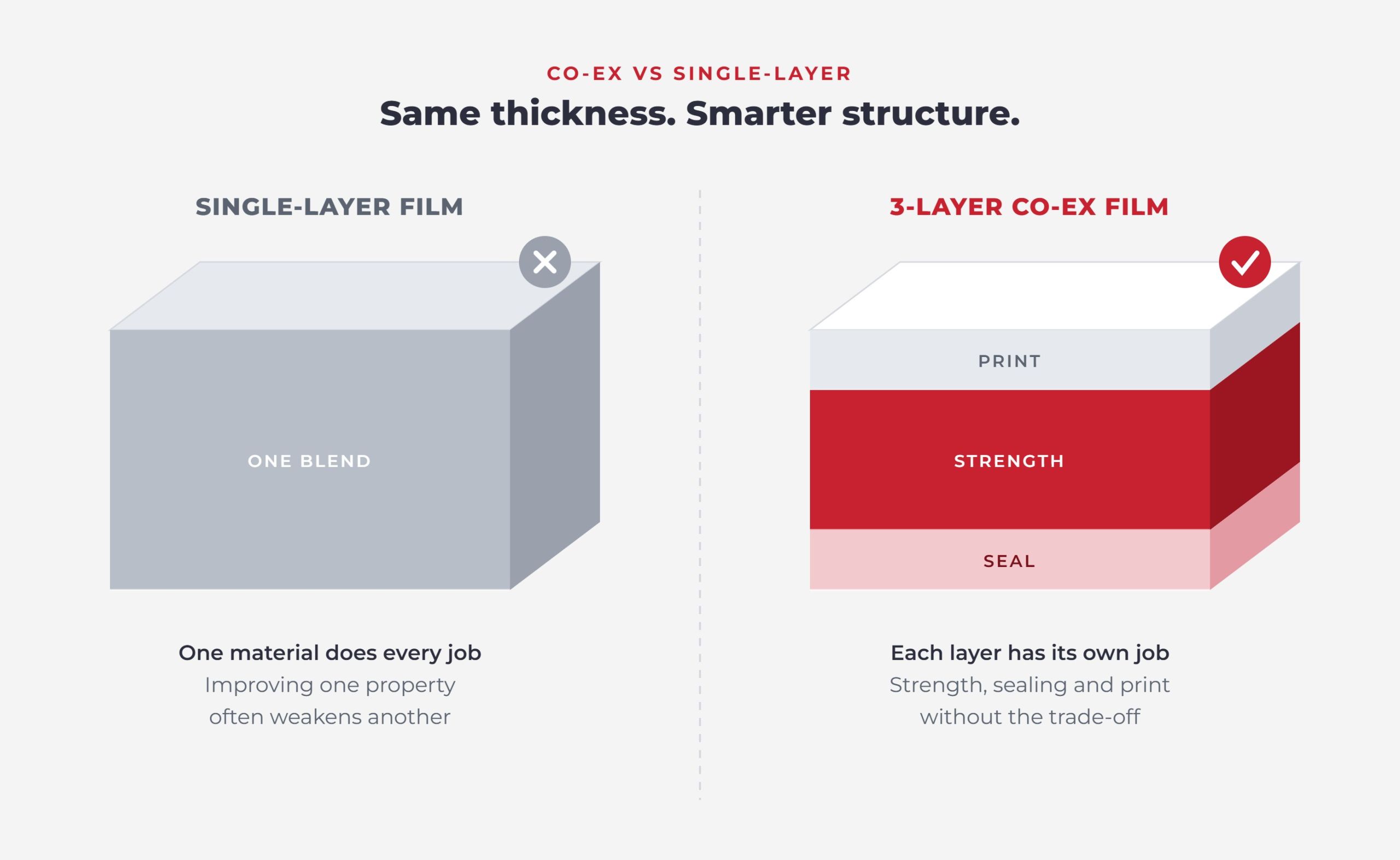
Co-extrusion (co-ex) melts different polyethylene grades separately and extrudes them together through one die, forming a single, integrated film. Each layer has its own job, for example strength in the core, sealing on the inside and printability or slip on the outside, so the film can be designed around your application rather than a compromise blend.
WHY CHOOSE CO-EX
THE BENEFITS OF CO-EXTRUDED FILM
IMPROVED STRENGTH
Layering different polyethylene grades improves tensile strength, puncture resistance and tear resistance compared with a single-layer film of the same thickness.
RELIABLE SEALING
A dedicated sealing layer provides strong, consistent seals and good hot-tack for automatic form fill and seal and high-speed packaging lines.
DOWNGAUGING
Because each layer works harder, films can often be made thinner while keeping performance, reducing material use and cost per pack.
TAILORED PROPERTIES
Layer materials and ratios are selected to balance stiffness, flexibility, clarity, slip and sealing for the specific product being packed.
PRINT-READY SURFACE
The outer layer can be designed for printing and lamination, supporting clear branding and good ink adhesion.
MONO-MATERIAL OPTIONS
All-polyethylene co-ex structures avoid mixing different plastic families, which supports recyclability and in-house recycling of production waste.
CO-EX VS SINGLE-LAYER FILM
A single-layer film relies on one blend to do every job, so improving one property often weakens another. A co-extruded film separates those jobs into layers, giving better overall performance and more control over how the film behaves on your packaging line.
Not sure which structure suits your product? Our team will help you match the film to your application.
WHERE CO-EX FILMS ARE USED
- Form fill and seal packaging for liquids and powders
- Collation shrink and bundling films
- Lamination films for printed packaging structures
- Industrial and heavy-duty bags
- Agricultural and produce packaging
HOW IT WORKS
INSIDE A 3-LAYER CO-EX FILM
A 3-layer film is built as skin / core / skin. The thickness of each layer is set by a layer ratio, such as 1/3/1 (thin skins, thick core) or 1/1/1 (equal layers), so material is placed exactly where it does the most work.
01
OUTER SKIN
The outside surface
Chosen for printability, gloss, slip and scuff resistance. In courier bags the outer skin is often white for a clean, printable surface.
02
CORE LAYER
The structural backbone
Usually the thickest layer, providing stiffness, toughness and load-bearing strength. It can also carry colour for opacity, or recycled polyethylene where suitable.
03
INNER SKIN
The sealing surface
Selected for low seal-initiation temperature, high seal strength and hot-tack, so seals hold on fast packing lines and stay leak-free.
CO-EX IN PRACTICE
WHERE CO-EX MAKES THE DIFFERENCE
COURIER BAGS
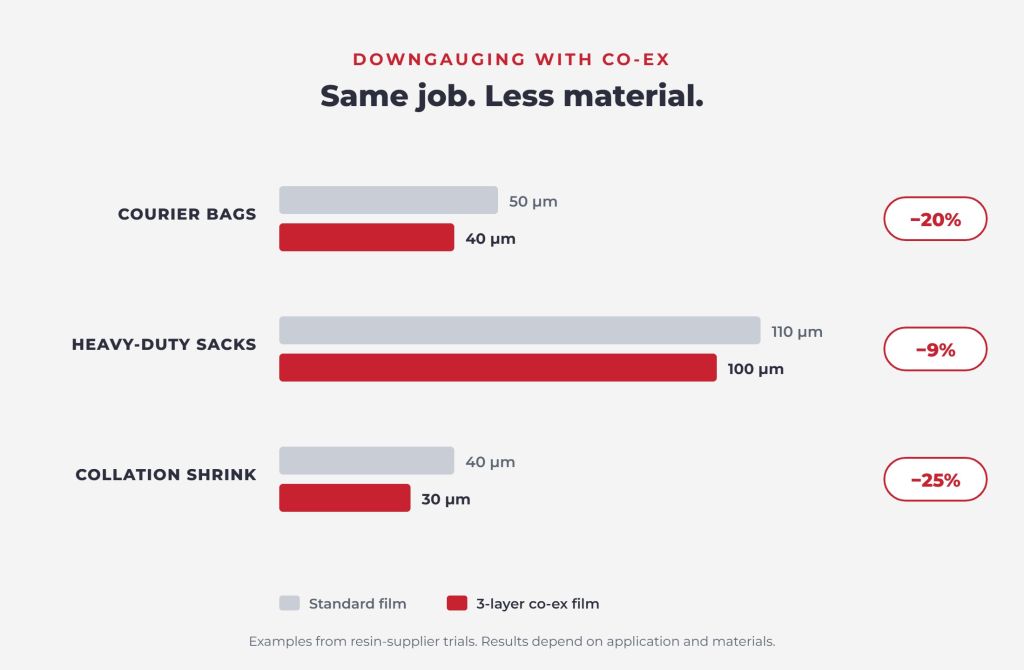
A white outer layer with a black inner layer gives a printable surface and full opacity, so contents stay private. In resin-supplier trials, 3-layer courier bag films have been downgauged by around 20% (for example from 50 µm to 40 µm) while improving tensile strength.
HEAVY-DUTY SACKS
For fertiliser and other heavy products, 3-layer structures combine a stiff, strong core with tough skins for high dart impact, tear and tensile strength and good bag-drop performance. Trials show that thinner gauges can be used without losing performance. UV stabilisation can be added for outdoor storage.
COLLATION SHRINK
Co-ex shrink films balance holding force, controlled shrink and high gloss for printed multipacks of bottles and cans. Supplier trials report 17–25% downgauging with 3-layer structures compared with standard films.
LIQUID & POWDER PACKS
Seal contamination is one of the main causes of leaking packs. A dedicated sealant layer helps seals close cleanly through product residue, protecting shelf life and preventing spills in form fill and seal packaging.
MORE WITH LESS
DOWNGAUGING
Because each layer is designed for a specific job, a co-ex film can often match or beat the performance of a thicker single-layer film. Using less material per pack reduces raw-material cost, transport weight and the amount of plastic that ends up as waste.
Industry examples include:
- Courier bags: about 20% thinner
- Heavy-duty sacks: about 10% thinner
- Collation shrink: up to 25% thinner
Figures are from resin-supplier trials and depend on the application and materials used.
DESIGNED FOR RECYCLING
RECYCLED CONTENT & MONO-MATERIAL
Co-ex makes it possible to put recycled polyethylene where it matters least, in the core, while virgin skins keep the outer surface clean and the seals reliable.
- Recycled content in the core layer, with virgin material on the surfaces
- All-polyethylene (PE//PE) structures that can replace mixed-material laminates such as PET/PE
- Clear or lightly coloured recyclate for applications where appearance matters
- In-house recycling of suitable production waste
LET’S WORK TOGETHER
HAVE A PACKAGING REQUIREMENT?
LET’S BUILD THE RIGHT SOLUTION.
From film extrusion and multi-layer structures to printing and converting, PembaFlex works with you to develop flexible packaging solutions tailored to your application requirements.